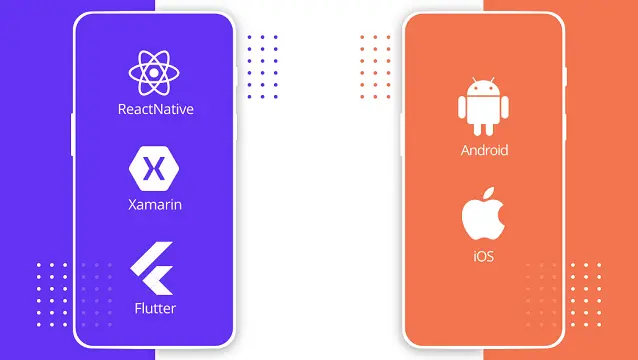
Cross-Platform Mobile App Development: Practical Guide and Benefits
Meta Description: Explore cross-platform mobile app development, frameworks like Flutter, React Native, and Xamarin, and benefits for startups and enterprises.
Introduction
Cross-platform mobile app development allows businesses to build applications that run seamlessly on multiple platforms, including iOS and Android, from a single codebase. Startups and enterprises adopt it to reduce development time, cut costs, and deliver consistent user experiences across devices. Unlike native-only apps, cross-platform solutions provide faster iterations, easier maintenance, and broader market reach, making them a preferred choice for businesses aiming for efficiency and scalability.
What Is Cross-Platform Mobile App Development?
Cross-platform mobile app development enables developers to write one codebase and deploy it on multiple operating systems. It differs from:
- Native apps: Developed specifically for one platform (iOS or Android).
- Hybrid apps: Built with web technologies but wrapped in a native container.
- Cross-platform apps: Combines native-like performance with shared code across platforms.
Popular frameworks simplify this process and help maintain performance, security, and user experience.
Popular Cross-Platform Frameworks
Flutter App Development
- Uses Dart language for high-performance apps
- Hot reload accelerates development
- Rich, expressive UI components
- Ideal for startups and MVPs needing fast iteration
React Native Development
- JavaScript-based framework with reusable components
- Strong community support
- Bridges native modules for performance
- Suitable for enterprise and consumer apps
Xamarin App Development
- Built on the .NET ecosystem
- Focus on enterprise-grade solutions
- Allows sharing of business logic while maintaining native capabilities
- Integrated with Visual Studio for seamless development
Other Frameworks
- Ionic: Web technologies for hybrid apps
- NativeScript: Native UI access with Angular or Vue
- Kotlin Multiplatform: Shared logic for Android and iOS
Practical Use Cases
- Startups: Launch apps quickly on iOS and Android with minimal resources.
- Enterprise apps: Maintain consistent UX and shared features across devices.
- MVP development: Test market viability without separate native builds.
- Shared business logic: Centralize backend logic for efficiency and maintainability.
Advantages of Cross-Platform Mobile App Development
- Faster development: Single codebase accelerates time-to-market.
- Cost efficiency: Less development and maintenance effort.
- Consistent UX: Uniform interface across devices.
- Easy maintenance: Updates propagate across all platforms simultaneously.
- Community support: Large libraries and plugins reduce custom coding.
Challenges and Considerations
- Platform-specific performance differences may arise.
- Some native features may require custom bridging.
- UI/UX adjustments are necessary for varying screen sizes.
- Testing is more complex due to multiple platforms and OS versions.
Best Practices for Cross-Platform Development
- Use responsive and adaptive UI designs for all devices.
- Optimize code to reduce memory and CPU overhead.
- Conduct regular testing on physical devices for accurate results.
- Choose the framework based on project requirements and performance needs.
Tools and Technologies
- Code Editors: VS Code, Android Studio, Xcode
- Testing Tools: Appium, BrowserStack, Detox
- CI/CD: Streamlined deployment for multiple platforms
These tools simplify development, testing, and deployment, ensuring high-quality cross-platform applications.
Future of Cross-Platform Mobile App Development
- Growing adoption: Flutter and React Native dominate due to performance and ease of use.
- Cloud and AI integration: Mobile apps are increasingly powered by AI features and cloud services.
- Low-code/no-code platforms: Accelerate development for businesses needing rapid deployment.
The trend points toward faster, smarter, and more efficient cross-platform mobile solutions with broader enterprise adoption.
Conclusion & Subtle Service Mention
Cross-platform mobile app development empowers businesses to deliver high-quality apps on multiple platforms efficiently. Leveraging frameworks like Flutter, React Native, and Xamarin helps reduce costs, accelerate time-to-market, and maintain consistent user experiences.
Our team also helps businesses build high-performance, scalable cross-platform mobile apps tailored to their unique requirements.